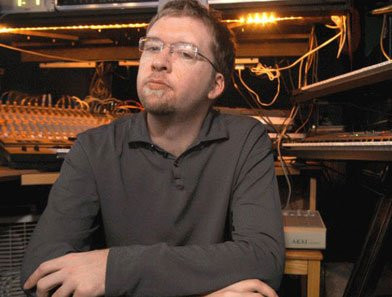
Sonic visionary Theorem (also known as Dale Lawrence) and this is no understatement especially around the 2000-era, created a series of forward-moving singles out of the shadows from his work, on the Plus 8 Records label. Working within conceptual, creative factors and self-discipline, he is 1 of Detroit’s next generation of hybrid-techno producers, who made advancing factors and steps, through this introspective series of singles collected on the CD [url=?id=r41031]Ion[/url], on the M_nus record label in 1999. His work and collaborations around the year 2000 is no lie, some seriously legendary and ground-breaking work, yet to be excelled or contested in 2024 (24 years later). The depth, quality and wide-range of music that Theorem has created, is truly astonishing, highly unique and long-lasting.
Theorem’s debut live attempt in Toronto in 1996, was interrupted mid-set as police shut down the event. 1 year later in Graz, Austria, his 1st true performance went off, playing at the Steirischer Herbst (a Styrian cultural arts festival). During 1998 he performed brilliant sets at Minus’ Consumed event outside Detroit, alongside Autechre in Toronto. And performed in 1998 at the FCMM New Media Festival in Montreal, Canada. It is ‘all-in-day’ for Theorem and his music does not allow obstacles and obstructions.
Theorem also performed live on stage, at the now legendary, ground-breaking and classic music festival the Detroit Electronic Music Festival (DEMF) in 2000, that was a landmark performance in deep techno and deep minimal. Thomas of 2000 Underground Music in 2023 said ‘I have not heard anything rival it 25 years later… and for a 45–50 minute set, it really took listeners somewhere, in a short amount of time’. ‘Glorious!’ as Carl Craig commented standing next to him on stage, at the beginning of his DEMF 2000 performance. But it did not end there… This performance should have just been a single 1-off performance, and no more… But thanks to Groovetech.com Radio, they hosted all the Detroit Electronic Music Festival (DEMF) sets in 2000, on their website (audio and video), and his performance was quickly being listened to, all over the world around 2000–2003.
An exponent [a symbol written above and to the right of a mathematical expression, to indicate the operation of raising to a power] of Detroit’s early 1990s techno energy, Theorem clearly understands the history at hand, behind the words Detroit techno. Keenly influenced by the talents of Kenny Larkin, Carl Craig and Richie Hawtin, Theorem animates movement through his machines and musical compositions. Detroit is his home, a decayed diverse city, mixing the warm and cold realities of machines and architecture, in total harmonic bliss and utopia. His trek towards techno began from a synth-pop background, being in a few bands in the late 1980s. Through the airwaves and underground parties in Detroit, his attention and interest around techno grew at the turn of the 2000-era decade. Realising what grabbed his ears, was actually from home!
Through the growth of his own material and the local underground scene, Theorem built a relationship with Richie Hawtin and the Plus 8 Records label. After demo-communication over almost 2 years, his debut release, the near-ambient house full-length album called [url=]Nano[/url] was released in March 1996, on Plus 8 Records label. It received great response throughout North America and Europe, acquiring positive press coverage and strong radio play, from Detroit’s eclectic radio station WDET-FM 101.9, to Germany, and all through the United Kingdom and beyond. A true underground gem, cherished by 1st generation underground internet listeners.
After the presence of [url=]Nano[/url], the sound structure of Theorem had gone through a metamorphosis. Between early 1996 and mid-1997, he found inspiration from the German triangle of dub-minimalist producers such as Basic Channel, Chain Reaction and Studio 1. Minimally speaking, local producers like Daniel Bell and Robert Hood were already stripping their sound down to the essentials, composing with modern time signatures. Similar frequencies were also heard in the developing sounds on the year-long recording project of Richie Hawtin’s 1996 [url=]Concept 1[/url] release. Elements from these new forms merged with his own style, illustrated in the follow-up 1997 single [url=?id=r15328]Mantra One[/url] on the Plus 8 Records label. The single featured [url=?id=r15328]Os[/url] and [url=?id=r15328]Dos[/url], that were 2 ambient experiments and equally as impressive as the dancefloor-friendly [url=?id=r15328]Mantra One[/url] and [url=?id=r15328]Clone[/url].
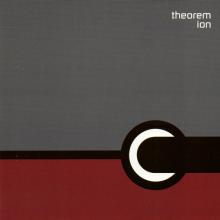
In 1997 he completed a heavy load of recording, mainly during the winter months. The bulk of these sessions are presented as 4 separate singles (or elements) within the 1998 TH vinyl EP series. The series is highlighted by the track [url=]Shift[/url], that features a drive-by recording of Detroit’s interstate I-75 highway, just yards from his home. The TH vinyl EP series was released in May 1999, on the CD compilation [url=?id=r41031]Ion[/url] (TH5). The following month, Theorem was invited to perform at the 3-day Sónar music festival in Barcelona, Spain, featured many established and next-wave artists from all around the globe.
[url=]020100 (Swayzak Mix)[/url] by Swayzak versus Theorem in 2002, clearly defined a very rare niche strain of deep minimal music, called progressive deep minimal (a genre named by Thomas of 2000 Underground Music in 2023).
The compilation [url=]THX – Experiments In Synchronicity[/url] on the M_nus record label in 2002, crafted (or rather assembled) between 2000–2001, was a true year 2000 technological experiment and collaboration, born out of technology. With the use of phone lines, CDRs and FTP uploads, not to mention the communal wide-spread introduction and use of the internet (that allowed new forms of communication and influenced the world’s behaviour at DSL speed…). Theorem provided source audio material to Swayzak, Stewart Walker and Sutekh, who then tweaked, layered, arranged and produced the end results. While trading audio clips, sounds and snippets back-and-forth, through the internet using 4KBPS dial-up modems, Theorem and collaborating industry-leading friends, crafted a new tectonic sound hybrid, rather than simply remixing each other’s work. The end result is a fantastic display of risk, restraint and amazing journeys.
In November 1999 Theorem launched the THX sublabel thx.m-nus.com, showcasing collaborations and remixes between Theorem and other like-minded artists, close to home and around the globe. Usually focusing on exchanges taking place electronically over the internet, further demonstrating how much technology has brought us closer together, and allowed new forms and possibilities, communication and ways of working.
The THX series created a buzz almost immediately! with the 1st 2 releases [url=]THX1[/url] and [url=]THX2[/url] both in 1998, between Theorem and the highly sought-after Swayzak duo (David Brown and James Taylor) out of London, United Kingdom. These were quickly followed up with [url=]THX3[/url] in 1998, that was a Theorem versus Stewart Walker musical affair.
While working for a website design company, he composed the soundtrack to Eden, an animated online comic adaptation by artist Kenjji Marshall. He has a degree in photography and digital imaging, and also designed and coded his own website th.m-nus.com around the year 2000, in its entirety featuring downloadable versions of his releases, for online listening (a wide-spread activity at the time, due to the introduction of the internet and MP3 downloading software).
Between 2011–2015 released new music on SoundCloud, with a slightly different angle to what he made in the decade before, being slightly closer to dub techno.
In 2020 released the track [url=?id=r14959847]Growth[/url], on vinyl and digital, on the Preservation Sound label, from the United Kingdom.
ALBUMS
Theorem
THX - Experiments In Synchronicity
2002,  ,
,
, Techno/Minimal/Tech House

Swayzak vs. Theorem
020100
2002,  ,
,
, Deep House/Minimal

Theorem Vs Sutekh
Untitled
2001, ,
, Techno/Minimal

Theorem Vs Swayzak
Day From Hell
2000, ,
, Tech House/Minimal Techno

Theorem Vs Stewart Walker
Intervals
2000, ,
, Dub Techno/Minimal

Theorem Vs Stewart Walker
Recoil
2000, ,
, Tech House/Minimal Techno/Deep Techno

Theorem
Ion
1999, CD, Comp, M_nus, ,
, Techno/Minimal/Ambient/Dub Techno
Theorem
Fallout
1999, ,
, Techno/Minimal/Dub Techno
Swayzak Vs Theorem
Break In At Apartment 205
1999, ,
, Tech House/Minimal

Theorem
Cinder
1998, ,
, Dub Techno/Tech House
Theorem
Shift
1998, ,
, Techno/Dub Techno
Theorem
Embed
1998, ,
, Techno/Minimal/Deep Techno
Theorem
Mantra One
1997, 12", Plus 8 Records, Plus 8 Records, ,
, Techno/Minimal/Ambient
Theorem
Nano
1996, ,
, Techno

APPEARANCES +
Various
Forward
2020, ,
, Techno

Nastia & Einzelkind
Cocoon In The Mix
2017, 2xCD, Comp, Mixed, Cocoon Recordings,  ,
,
, Minimal Techno/Techno

Viajer
Live At Casa Estela Pt.1
2016, File, MP3, Mixed, Contumancia,  ,
,
, House/Tech House/Techno/IDM/Glitch/Minimal

Viajer
Live At Anita Berber Pt.1
2015, File, MP3, Mixed, Contumancia, ,
, Glitch/House/IDM/Tech House/Minimal/Techno

Luijo
BET.POD 010
2015, 11xFile, WAV, Comp, Mixed, Betyar Records,  ,
,
, Techno/Tech House/Deep Techno/Dub Techno

Vera Sue
Cxemcast 021
2015, File, MP3, Mixed, 320, Схема,
Techno/Deep House

Eli Verveine
Mix Tape #88
2014, File, MP3, Mixed, 320, Mixmag.info,  ,
,
, Ambient/IDM

Module Werk
Roots United 09
2013, File, MP3, Mixed, 320, Follow Me Radio, ,
, Techno/Electro/Dub Techno/Experimental

Luke Hess
RA.368
2013, File, MP3, Mixed, 160, Resident Advisor, ,
, Techno/Deep House/Dub Techno/Minimal/Electro

Various
minMAX
2013, ,
, Techno/Minimal/Tech House/Deep House/Progressive House

XDB
Field Recording 035
2012, File, MP3, Mixed, Field Records (3),  ,
,
, Techno/Dub Techno

Brendon Moeller
Do/Nothing Exclusive 013
2012, File, MP3, Mixed, do/nothing,  ,
,
, Techno/Dub Techno/Minimal

Quantec
Field Recording 009
2010, File, MP3, Mixed, 320, Field Records (3), ,
, Deep House

Matthew Hawtin
Once Again, Again
2010, ,
, Ambient/Techno/Minimal Techno/Ambient House/Acid/Trance

Margaret Dygas
LWE Podcast 35
2009, File, MP3, Comp, Mixed, 192, Little White Earbuds, ,
, Electro/Tech House

Claude VonStroke
At The Controls
2007, ,
, Techno/Minimal/Tech House

Richie Hawtin
DE9 | Combined
2006, 2xCD, Comp, Mixed, Third Ear (2), M_nus,  ,
,
, Techno/Minimal

Swayzak
Route De La Slack Remixes
2006, ,
, Deep House/Tech House
 r82’
r82’Swayzak
Route De La Slack (Remixes & Rarities)
2006,  ,
,
, Downtempo/Tech House/Minimal

Richie Hawtin
DE9 | Transitions
2005, ,
, Techno/Minimal

Elkay
Superimposed
2002, CDr, Mixed, Promo, Not On Label, ,
, Techno/Dub Techno

Gee Why
Nyquist Perversion
2002, CDr, Mixed, Promo, Not On Label, ,
, Dub Techno/Minimal Techno

Calle Dernulf
En Linje - Calle Dernulf Samlar Techno
2001, CD, Comp, EMI,  ,
,
, Techno

Various
All Access To Detroit's Music Festivals
2001, ,
, House/Techno/Deep House/Downtempo

Richie Hawtin
DE9 | Closer To The Edit
2001, ,
, Minimal Techno

Richie Hawtin
DE9 | Closer To The Edit (Parts)
2001, ,
, Techno/DJ Battle Tool/Minimal Techno

Terry Lee Brown Jr.
Terry's Café 3 - A Chill Out Session
2000, CD, Comp, Mixed, Plastic City, Plastic City, ,
, Dub/Deep House/Tech House

Angel Molina
Wax Sessions #1
2000, CD, Mixed, So Dens,  ,
,
, Techno/Minimal

Various
Plus 8 Classics Volume 3 (1995-1997)
2000, CD, Comp, Plus 8 Records, ,
, Techno

Various
Plus 8 Classics (1990-1997)
2000, CD, Comp, Promo, Smplr, Plus 8 Records, ,
, Techno

Various
1990 - 1997 : Plus 8 Classics
2000, ,
, Techno/Acid

Various
Turbo Studio Sessions (Vol. 1)
1999, CD, Comp, Turbo, ,
, Techno/Tech House

Various
Sónar 99
1999, 4xCD, Comp, So Dens, ,
, House/Techno/Electro

Various
Two Hundred And Forty Volts
1999, ,
, Techno/Tech House/Electro

Various
Satisfaxion - Second Volume
1998, ,
, Breaks/Techno/Minimal/Tech House

Klank (3) Vs. Sutekh
Bipass
1997, Cass, Mixed, C90, Belief Systems, ,
, Techno/Acid

Various
NetWORKS.3 - An Intellinet Compilation
1996, ,
, House/Techno

Cosmic Crates
White Light 102
2014, 2xFile, MP3, Mixed, Unofficial, 320, White Light Mixes, ,
, Experimental/Future Jazz/Deep House/Soul/Indie Pop/Downtempo/Ambient/P.Funk/Rhythm & Blues/Instrumental/Techno/Dub Techno/Tech House/Trip Hop

Various
At Audiometric Radio Show (December 2003)
2003, File, MP3, Mixed, P/Unofficial, 320, Electrochelou* Web-Label,  ,
,
, IDM/Experimental/Minimal Techno/Abstract/Electro

Richie Hawtin
DE9 | Transitions
, Techno/Minimal
